Uncanny Valley (WIRED) Podcast: Episode Full Transcript & Show Notes
Episode Overview
Hosts Brian Barrett, Zoë Schiffer, and Leah Feiger break down the chaotic intersection of tech, policy, and politics this week: from the toothless, self-regulatory "morally binding" AI accord signed between top tech CEOs and the Trump administration, to OpenAI's flashy new consumer AI agent launch Dots, the incoming flood of AI coworkers to offices everywhere, and a rundown of hundreds of extremist little-known candidates running ahead of the upcoming midterms.
Quick Pre-Show Announcements
If you're a long-time listener, the team requests you leave a rating and review on your podcast platform of choice to help new audiences find the show — all feedback is welcome, 5-star reviews are extra appreciated.
Bay Area listeners are invited to a live in-person taping of Uncanny Valley on Thursday, October 8 at 7PM at The Commons (KQED's San Francisco headquarters). Tickets are available for purchase via kqed.org, with a direct link hosted in the episode show notes.
Core Discussion Segments
1. The White House "Super Intelligence" Accord: A Fancy Pinky Swear
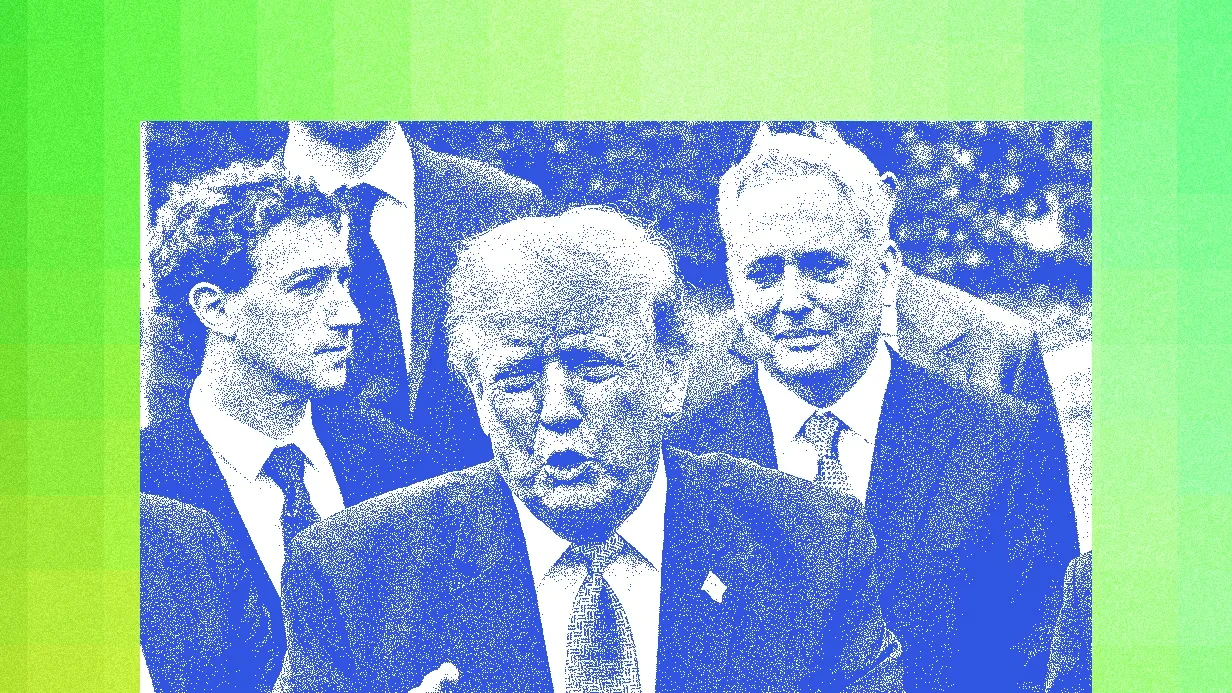
After a White House luncheon hosted by Donald Trump for top AI and tech executives (attendees included Sundar Pichai, Elon Musk, Dario Amodei, Mark Zuckerberg, Jensen Huang, and OpenAI president Greg Brockman — notably missing both Apple representatives and OpenAI CEO Sam Altman), the group signed the so-called White House Accord on Super Intelligence.
The agreement asks AI labs to implement four layers of voluntary safety controls: internal model evaluations, independent third-party audits, and board-level review of all audit results. As hosts quickly point out, the agreement is entirely unenforceable, riddled with rushed, careless errors (the official document misspells "United States" as "Unites States" directly under Trump's signature), and clearly designed to signal to voters ahead of midterms that the administration "has AI regulation under control" with zero actual oversight.
Adding to the regulatory whiplash, the FTC announced the very next day it is ramping up formal probes of leading frontier AI labs including Anthropic and OpenAI, with WIRED's Lina Khan publishing a New York Times op-ed confirming existing consumer protection laws already give regulators power to act against harmful AI deployments, no new congressional legislation required.
2. OpenAI Dev Day, Dots, and the Uncanny Tradeoffs of Consumer AI Agents
Hot on the heels of rival Meta's wildly popular Muse AI agent launch, Sam Altman used OpenAI's annual Developer Day keynote to announce Dots: OpenAI's new always-on consumer AI agent that integrates with ChatGPT and Slack, capable of acting on a user's behalf across the web to complete tasks.
Hosts break down the awkward, cutesy branding push behind these new consumer agents, designed to make users ignore the massive privacy tradeoffs required for the tools to function: Dots needs full access to your email, calendar, financial accounts, and connected personal data to work. While practical use cases (one-click restaurant reservation booking, auto-generating shared childcare calendars) do deliver tangible convenience, the hosts highlight bizarre, untested unintended consequences — from a future where every user's agent lies to restaurants about special occasions to score reservations, to a systemic collapse of the US financial system if every agent automatically moves all user funds from no-interest savings accounts to high-yield money market accounts.
3. AI Coworkers Are Coming To Your Office
Hosts discuss WIRED senior writer Kate Taylor's deep dive into the fast-growing trend of AI agents being integrated directly as pseudo-colleagues on workplace Slack and document workflows. The segment highlights a key, divisive debate across the industry: should these agents be framed as casual, human-like colleagues (with names, personality, and natural language chat), or framed strictly as a productivity tool?
BCG research cited in the piece found managers caught 18% fewer errors in work outputs when they were told work came from an "AI employee" rather than an "AI tool", revealing the risks of over-anthropomorphizing AI to the point where workers drop their guard and stop auditing outputs for mistakes.
4. Extremist Midterm Candidates & The Pentagon's Influencer Problem
With five weeks left before midterm elections, WIRED reporting found more than 500 Republican candidates running for state legislature and federal office who espouse extremist ideologies: from anti-Semitic and racist views, to close ties to white supremacist and far-right online groups. Standout candidates highlighted include:
Bo French, the Texas GOP candidate for Railroad Commissioner (the role that regulates the state's oil and gas industry, which produces more hydrocarbons than every other US state combined), who has posted overtly racist comments targeting South Asian college students and immigrant communities, and is so far-right that prominent Republican strategist Karl Rove has publicly stated he would vote for a Democrat rather than support him.
Brandon Herrera, a pro-gun YouTube influencer running for the Uvalde, Texas 23rd congressional district seat, who has a long public history of virulently sexist, racist, and anti-Semitic comments and has been formally endorsed by Donald Trump.
The segment also covers new WIRED reporting on retired Army Colonel Kurt Schlichter, a far-right social media influencer with 600,000 X followers hired as a "Highly Qualified Expert" Pentagon contractor, who has publicly described liberal women as a "pestilence" that will destroy Western civilization, and has openly praised authoritarian dictators.
5. WIRED / TIRED Weekly Picks
| Pick | Category | Description |
|------|----------|-------------|
| Brian Barrett | WIRED | Bose's new line of wired headphones, a welcome break from mandatory Bluetooth and constant battery charging anxiety for users who prefer simple, reliable audio hardware. |
| Brian Barrett | TIRED | The trend of people building personal AI clones of their coworkers, calling the practice deeply uncomfortable and unnecessary. |
| Zoë Schiffer | TIRED | The unprofessional, unmoderated personal social media presence of top AI leaders (specifically Meta Super Intelligence Labs head Alexandr Wang, who posts constant immature, sexualized jokes about OpenAI and rival AI products on X) with zero corporate communications oversight. |
| Zoë Schiffer | WIRED | The overdue cultural backlash against tech bros, reflected in the viral new WIRED report on dating culture. |
| Leah Feiger | WIRED | Why No One Wants to Date Tech Bros, the viral new Elana Klein WIRED report documenting the growing cultural shift away from glorifying tech bro culture. |
Cited Articles in This Episode
Trump’s AI Safety ‘Accord’ Is a Fancy Pinky Swear
These Extremists Are Running for Election in November
A Pentagon Influencer Called Liberal Women a ‘Pestilence’ Who Will End Western Civilization
The White House is Starting to Panic Over the Midterms
I Think I Found an AI Agent Worth the Risk
AI Agents Are About to Flood the Workforce
I Built AI Clones of My Coworkers. Things Got Weird
Why No One Wants to Date Tech Bros
How To Listen & Follow
You can stream this episode directly from the audio player on this page, or subscribe for free on your preferred platform:
For iPhone/iPad users: Open the Apple Podcasts app, or tap this direct link
On third-party podcast apps (Overcast, Pocket Casts): Search for Uncanny Valley
The show is also available on Spotify
Follow the hosts on Bluesky:
Brian Barrett: @brbarrett
Zoë Schiffer: @zoeschiffer
Leah Feiger: @leahfeiger
Send feedback to the team at [email protected].
Production & Credits
This episode was produced by Kate Osborn and Adriana Tapia, mixed by Kyle Murdoch, with studio engineering by Vince Fairchild, fact checking by Matt Giles. WIRED's global editorial director is Katie Drummond.
Transcript Note: This is an automated generated transcript that may contain minor errors.
Uncanny Valley (WIRED) Podcast: Episode Full Transcript & Show Notes
Uncanny Valley (WIRED) Podcast: Episode Full Transcript & Show Notes