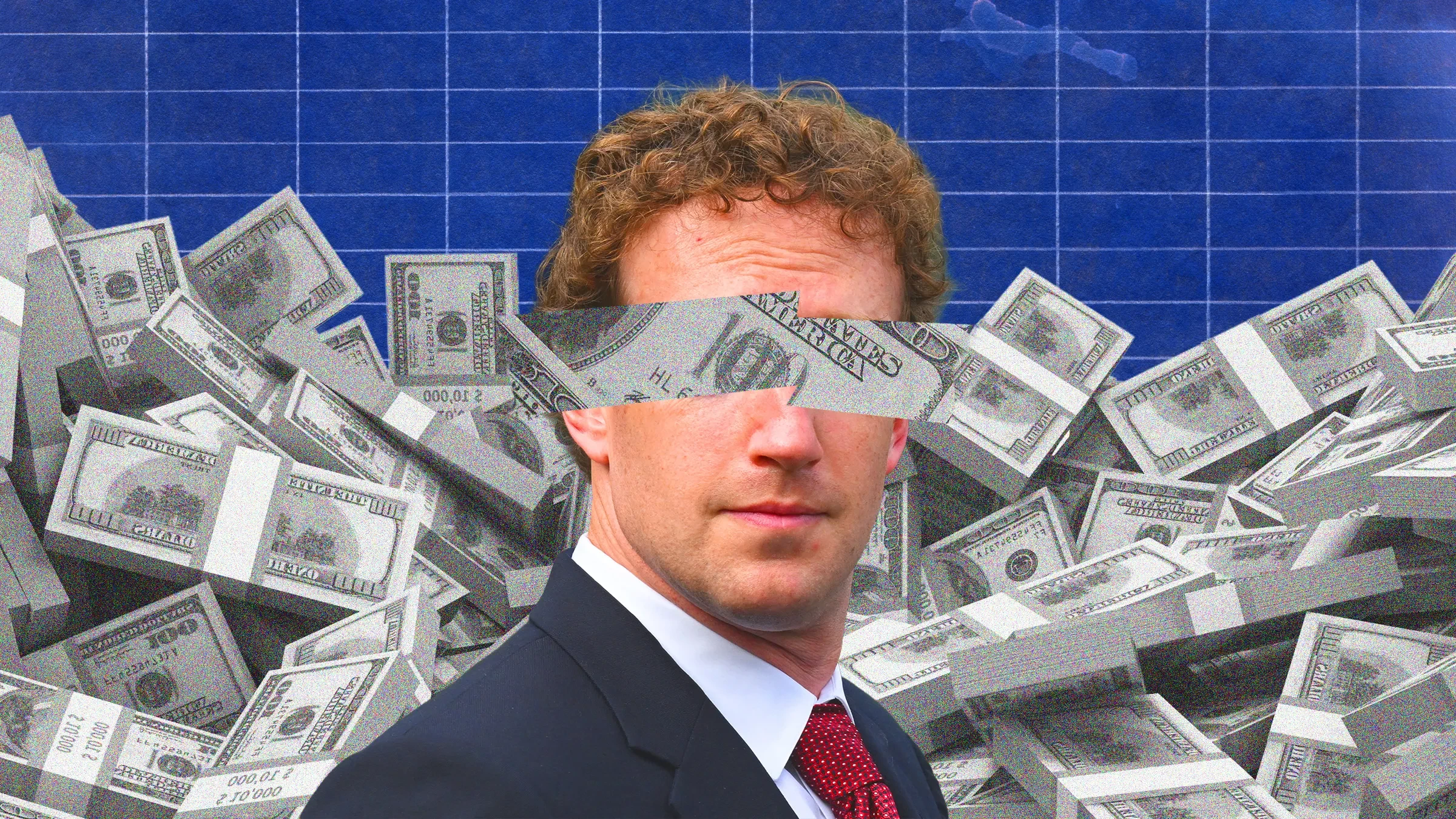
Meta’s Record $25 Billion New Mexico Penalty Is No More Than a Minor Business Cost — Yet
Earlier this week, a New Mexico state court judge handed down a historic $25 billion fine against Meta, finding the social media giant in violation of state consumer protection statutes stretching all the way back to the 2018 Cambridge Analytica data privacy scandal. That figure is the largest financial penalty Meta has ever been ordered to pay in its entire history — but the WIRED editorial team immediately landed on one burning question: Will this massive fine even register as a meaningful setback for the trillion-dollar tech firm?
How We Got Here: The New Mexico Lawsuit Timeline
The case was first filed back in 2021, with state prosecutors alleging Meta repeatedly lied to its hundreds of millions of users about how it collected, stored, and shared their personal data, in clear violation of the state’s Unfair Practices Act. The New Mexico attorney general later expanded the suit to include formal challenges to Meta’s widely criticized internal content moderation policies. A state jury ruled fully in the state’s favor this past September, paving the way for the eye-popping multi-billion dollar penalty.
Meta chief legal officer C.J. Mahoney pushed back hard on the ruling in an official statement, arguing the attorney general’s enforcement strategy and the resulting verdict make operating legally within New Mexico’s borders effectively impossible. “At its core, this suit is attempting to slap a de facto tax on online speech to invent entirely new rules governing what people are allowed to post and share on the internet,” Mahoney said, adding that the company is fully confident it will get the verdict overturned on appeal.
Meta’s 2024 Legal Tab Adds Up Fast — But It’s Still Chump Change
This year alone, Meta has been hit with so many separate lawsuits and adverse rulings it’s almost impossible to keep a full, accurate tally. Earlier this year, a separate New Mexico jury ordered the company to pay $375 million for Unfair Practices Act violations tied to documented failures around child safety on its platforms; a second phase of that same case tacked on an additional $567 million in penalties. Out in Los Angeles, a Superior Court judge found both Meta and Google-owned YouTube liable for harming teen users’ mental health via deliberately addictive app design, awarding a young female plaintiff $6 million in damages, the vast majority of which Meta is on the hook for.
August brought a landmark nationwide settlement, where Meta agreed to pay a total of $17 to $18 billion over 10 years to resolve a federal lawsuit joined by nearly every U.S. state, which also alleged the company knowingly built Instagram and Facebook features to hook underage users and harm their wellbeing.
Add all those penalties up, and the total runs north of $43 billion in near-term liabilities — but financial analysts and legal observers note that sum barely moves the needle for Meta’s bottom line. Reuters reports New Mexico’s legal team originally asked the judge to award between $35 and $45 billion in the Cambridge Analytica-tied suit, a sum that would have been transformative for state public services, but would have barely made Meta flinch. Even if the judge had gone all the way up to the maximum possible statutory penalty of $219 billion — calculated as $5,000 for each of 43 million individual data privacy violations — Meta would have only felt a minor financial sting.
At time of writing, Meta boasts a market capitalization of roughly $1.7 trillion. Its stock saw a small dip last Thursday, but that slump was tied to a confluence of unrelated factors: a mixed Q3 earnings report, the company’s announced massive planned capital expenditure for AI infrastructure, and a broader sector-wide selloff of AI tech stocks. No single existing fine poses an immediate existential financial threat to the firm.
The Real Pressure Won’t Come From Fines Alone, Legal Experts Say
A cascading sequence of secondary ripple effects from these ongoing lawsuits, however, could force real structural change inside Meta long before any penalty is large enough to hurt its balance sheet.
For starters, Meta’s public reputation is already in steady free fall: juries across the country are repeatedly ruling against it, public protests over its harm to children are widespread, and even internal employees have become far more vocal criticizing the company’s lax internal policies around safety and content. Corban Rhodes, a partner at DiCello Levitt, the outside law firm representing New Mexico in the case, notes that every time Meta chooses to fight a case in court instead of settling, the trove of internal documents and evidence that gets entered into public record becomes a reusable resource for every future plaintiff suing the company.
“This latest trial added more than 100 previously sealed exhibits to the public record — materials that had been hidden from public view for more than a decade, ever since the Cambridge Analytica scandal first broke,” Rhodes told WIRED. One newly unredacted document is a 2018 internal email sent by then-Meta COO Sheryl Sandberg to her senior leadership team just days after the scandal went public, where she wrote: “The single biggest issue we face right now — and I need every single one of you to take this seriously — is that there were a million third-party developers with broad access to user data. We are going to see dozens more public firestorms like this one over the next month, and the next full year.”
Another emerging risk for Meta: commercial insurance carriers are starting to push back hard against being forced to cover the company’s massive legal defense costs across thousands of active lawsuits. Some regulatory analysts even predict that tech and AI insurance will become a de facto third-party governance mechanism for the AI industry, with carriers requiring strict safety guardrails for model development and deployment as a precondition for offering coverage. Meta got a preview of this shift back in March, when a Delaware state judge ruled that its liability insurers have no legal obligation to cover its defense costs for the thousands of active consumer and state suits pending against the firm.
Brian Quinn, a Boston College Law School professor specializing in corporate and transactional law, points out there is no specific fine value that would ever be large enough to push Meta into bankruptcy on its own — but the real tipping point could come if shareholders and the board of directors stop treating the company as a monolith, and start holding individual C-suite executives and board members personally accountable for repeated illegal decisions.
“Right now, corporate indemnification laws are written so that even if an employee or executive is found to have violated consumer protection laws, they are not automatically held personally liable, as long as a court finds they were acting in good faith and in the company’s best interests,” Quinn explains. “But the math changes when shareholders realize the same group of leaders have been caught violating the exact same set of laws over and over again, in seven different lawsuits, with the exact same pattern of harmful conduct.” Once that accumulation of adverse rulings hits a critical mass, Quinn says, shareholders could vote to strip those specific executives of their corporate indemnification protections — which would immediately force massive operational and policy changes, as top leaders would no longer be shielded from personal legal liability.
And Meta’s legal troubles are almost certainly not going to slow down any time soon. As regulators and courts wrap up years of litigation targeting the first two generations of social media platforms, the next wave of lawsuits is already building, and it will be almost entirely focused on harms tied to generative AI, which Meta is pouring tens of billions of dollars into developing. “For the longest time, regulators and courts were playing catchup with social media 1.0 and 2.0 harms, but we are now moving past that era,” Rhodes says. “I have no doubt the next huge wave of tech industry litigation will center entirely on AI.”
This is an edition of Steven Levy and Lauren Goode’s Backchannel newsletter. You can browse past issues of the publication here.
Meta’s Record $25 Billion New Mexico Penalty Is No More Than a Minor Business Cost — Yet
Meta’s Record $25 Billion New Mexico Penalty Is No More Than a Minor Business Cost — Yet