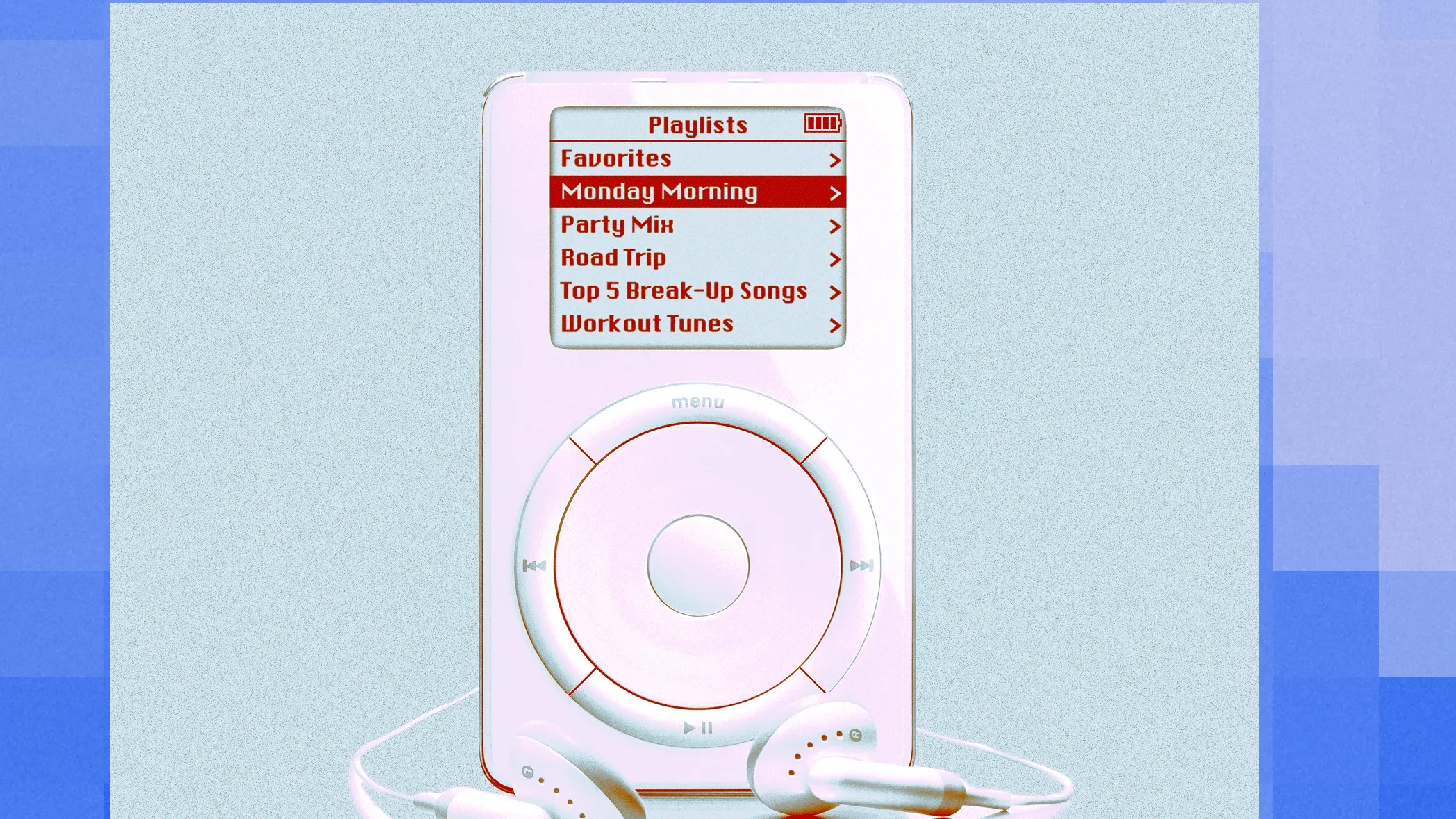
The iPod at 25: Remembering the Perfect Single-Purpose Device That No iPhone Could Ever Replace
I can clearly trace the exact moment the iPod entered the world, 25 years ago this month. Back then I was on staff at Newsweek, and the launch fell on October 23, barely a month after the World Trade Center twin tower attacks, when the whole city was still wrapped up in processing the aftermath of that tragedy. I didn’t travel down to Cupertino for Steve Jobs’ iconic launch event, where he pulled the tiny device out of his jeans pocket and declared it could hold an entire personal music library in your palm. Instead, Apple couriers hand-delivered the prototype unit straight to my New York office, and Jobs hopped on a call with me to make his pitch. “The iPod,” he told me plainly, “is going to be a landmark product.”
He was completely right. By 2004, I’d written a Newsweek cover story titled iPod Nation, and later went on to publish a full book about the device, named The Perfect Thing.
The iPod’s quiet, unmemorable death
There is no single sharp, widely publicized date marking the iPod’s end. Even now, there’s debate over when to mark its official passing. The most commonly cited official date is May 10, 2022, when Apple formally discontinued the iPod Touch, the last remaining product bearing the iPod name. But I never counted the Touch as a real iPod at all — it was little more than an iPhone stripped of cellular connectivity.
The far more fitting end marker lands on July 27, 2017, when Apple axed the iPod Nano (the last traditional full-screen iPod model) and the iPod Shuffle, the postage-stamp sized clip-on player you could fasten straight to your shirt. (The company had already quietly discontinued the iconic hard-drive, click-wheel iPod Classic back in 2014.)
All of these winding-down dates were the inevitable, preordained consequence of a single announcement Steve Jobs made on January 11, 2007. That’s the day he told the crowd Apple was launching three new products in one: a mobile phone, an internet communications device, and “the best iPod ever” — all integrated into a new gadget called the iPhone. From that exact second, the iPod as a standalone, distinct product was living on borrowed time.
Apple still sold millions and millions of the beloved devices for years after that iPhone reveal, before the line finally went completely silent. But even as we grow attached to our modern smartphones, the iPod solved a specific, quiet craving that still lingers for many of us. I still stand by my original claim: the iPod really was The Perfect Thing.
The joy of a device that only does one job
The iPod was a single-function gadget that executed its core purpose flawlessly, and it made people unconditionally, uncomplicatedly happy. Our relationships with modern iPhones and Android devices are messy by comparison.
There’s no denying the smartphone that replaced the iPod is exponentially more transformative than its predecessor. Financially, it is the core engine that turned Apple into a $4 trillion global giant, and it is easily the strongest candidate for the most influential consumer product of the 21st century so far. But no one would ever call the iPhone perfect. It voraciously gobbles up our attention, often thanks to toxic social media platforms built to hook users. Countless car crashes and totaled vehicles happen every year because drivers stare at their phone screens instead of the road ahead. Endless doomscrolling on our phones has been directly linked to rising rates of anxiety and depression. The iPod, by contrast, brought nothing but unadulterated joy.
Part of that magic came from Steve Jobs’ commitment to completely reinvent the iPod every single year. Apple easily could have sold the original 2001 iPod design unchanged for years, but instead it launched a string of dramatic, playful reinvention cycles. Every new generation had a completely new size, shape and set of features. The devices kept getting smaller, sleeker, and more fun: first came the iPod Mini, then a whole lineup of Nanos and Shuffles sold in wild, bright colors and quirky configurations. Modern iPhone updates drive sales, but they never deliver that same giddy thrill of a total product redesign.
The "Father of the iPod" on why the device was never long for this world
I reached out to Tony Fadell, widely known as the father of the iPod, to ask if there was an alternate timeline where Apple kept making dedicated standalone music players. Fadell led the original iPod hardware team, and delivered the finished product in a breakneck sprint of less than 12 months. He later played a core role in developing the first iPhone, and went on to co-found Nest, become a top-tier tech investor, and publish a critically acclaimed memoir.
Fadell left Apple in 2008 and worked as a consultant for two years after that, when the iPod line was still going strong. Even back then, he recalls, Jobs and other Apple executives all agreed the iPod was on a clear path to obsolescence, no matter how loyal its fanbase was. Once the iPhone proved to be a runaway blockbuster that also drove up Mac sales, and Apple started chasing mass-market hits like the iPad, iPod sales stopped mattering at all to the company’s bottom line. Jobs was famously ruthless about prioritizing high-impact products, and his successor Tim Cook shared that exact mindset. Fadell says there was almost no hand-wringing or regret over the iPod’s fate. “All the conversations were about Apple not wasting time on lower-value projects,” he explained.
Even so, he fully agrees with me that the iPod’s disappearance left a gap that no modern product has filled. In hindsight, he says, the iPod’s greatest superpower was all the things it didn’t do: most importantly, it didn’t connect to the internet. “Since the iPod was offline, you had zero other distractions pulling you away from your music. Today, you’re stuck with all the annoyances of being always connected, and you can never get that same deep, immersive listening experience. You can always get distracted, swipe away to a different app, and lose the moment.”
“This thing should still exist,” he told me.
The unkillable iPod fan community
Thousands of people clearly agree with him. There are dozens of active, thriving communities on Facebook and Reddit made up of diehard iPod fans who go to extreme lengths to modify vintage iPod units: swapping out tiny old hard drives for massive flash storage, adding Bluetooth support, and extending the life of their decades-old players. There’s even a popular third-party app that skins your iPhone to look and function exactly like a classic click-wheel iPod. It works perfectly well, but you’re still only one swipe away from your social feeds, work emails, and every other chaotic distraction that has nothing to do with the music you’re trying to enjoy.
When I asked Fadell about the iPod’s legacy, his answer centered far more on what it built for Apple than nostalgia for the device itself. “The iPhone never would have existed if the iPod didn’t come first,” he said. “Which means the massive, consumer-focused Apple we all know today would never have existed at all without the iPod.” It turned a niche computer maker with a small, loyal user base into a global consumer electronics giant. “The craziest part is that 25 years is exactly half of Apple’s entire corporate lifespan. We had the Apple II, then the Mac, and then boom — the iPod hit, and everything changed.”
Personally, I prefer to remember the iPod for what it was, not just the products it led to. Not long ago, I dug my old iPod Classic out of storage, plugged it into my vintage 30-pin boombox, hit shuffle, and sank straight into that same perfect, uninterrupted bliss I remembered. I suspect millions of other people would jump at the chance to go back to iPod Nation.
Of course, Apple’s current leadership under CEO John Ternus has zero incentive to revive the line. It still makes me sad, though, that a whole generation of people are growing up with no idea what it’s like to own a dedicated music device that will never cut off your favorite song mid-track with an unexpected call, text, or random notification. They have no clue what they’re missing.
This piece is part of Steven Levy and Lauren Goode's Backchannel newsletter. You can browse all past issues of the newsletter here.
The iPod at 25: Remembering the Perfect Single-Purpose Device That No iPhone Could Ever Replace
The iPod at 25: Remembering the Perfect Single-Purpose Device That No iPhone Could Ever Replace