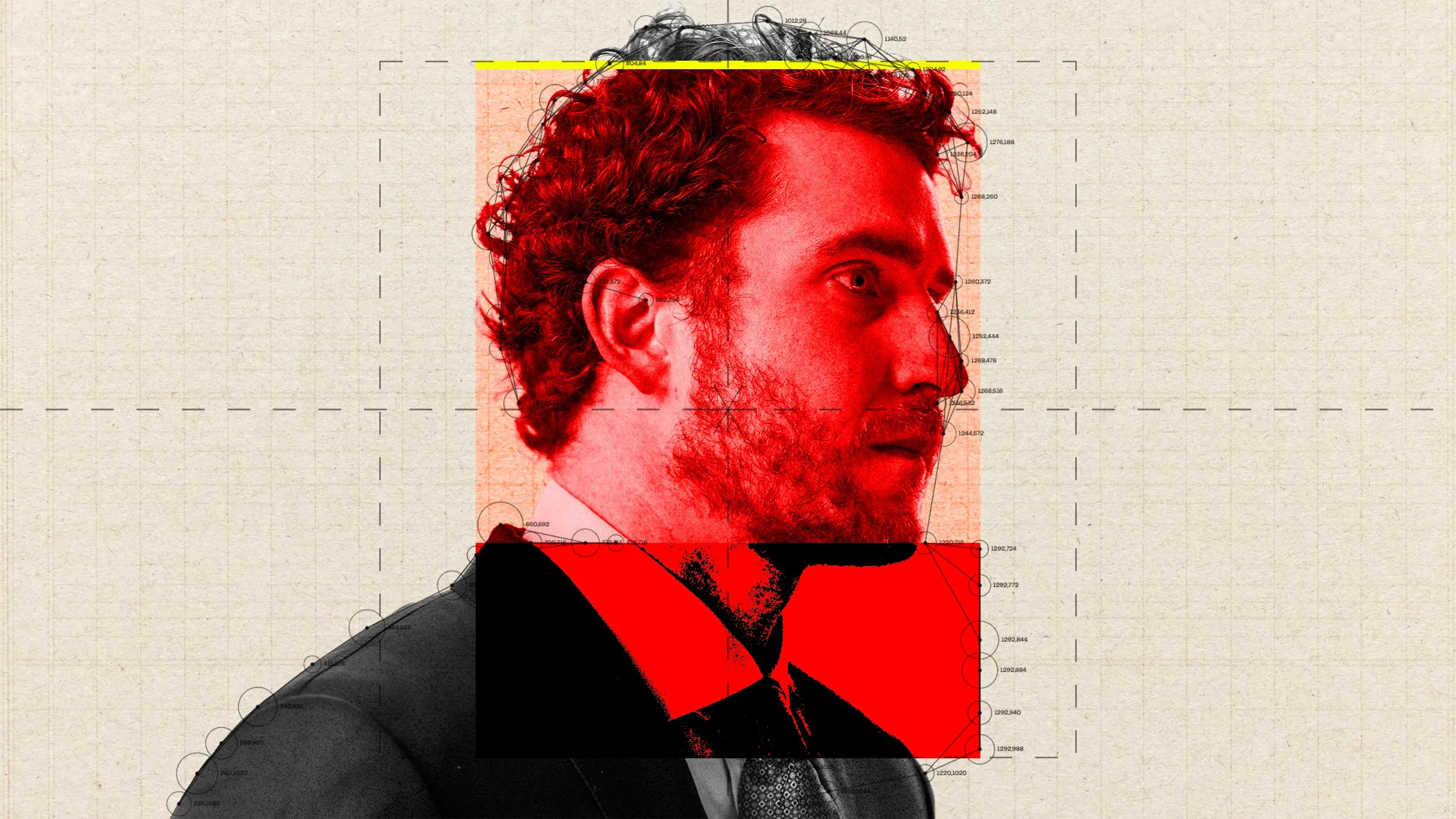
Billy Evans, Haemanthus, and the Long Shadow of Theranos
⚠️ Spoiler Alert: Minor plot details from the new documentary You Can See Everything appear below. Proceed at your own discretion.
Long before they became the central subjects of Nathan Fielder and Lance Oppenheim’s viral, widely discussed new documentary, Elizabeth Holmes and Billy Evans occupied a uniquely unusual space as a high-profile couple. “Holmes may have ultimately failed to change the world in the way she set out,” Evans wrote in a 2022 letter submitted for Holmes’ sentencing, “but she has undeniably changed mine.” The disgraced Theranos founder, during the hardest stretch of her life, taught her husband a level of patience he previously would have written off as unnecessary and overly soft. A separate sentencing letter from a mutual friend echoed that, noting that after the pair returned from a monthslong cross-country camping trip, Evans “displayed a new level of compassion in his demeanor, a strong sense of intention with his actions, and a heightened desire to listen to and look at others with purpose.” No matter what the public thought, Evans argued, Holmes was not the only member of the pair who had earned a second chance.
Now that second chance has evolved into what could easily read as a second, far higher-stakes second chance, centered on Evans’ new startup Haemanthus — a venture Evans has repeatedly and loudly assured his social media followers is absolutely, unequivocally, not “Theranos 2.0.” A source familiar with the business confirmed to The Wall Street Journal that Holmes holds no formal role at the company, but footage from You Can See Everything clearly shows Evans openly agreeing that he and Holmes are effectively building a new iteration of Theranos side by side. The pair brainstorm product ideas remotely while Holmes is still incarcerated, and map out a full roadmap to design and test a functional working prototype for their diagnostic device on camera.
“To meet her, to spend time with her, that was the intention of the film,” the Austin-based Evans told David Friedberg, co-host of the All-In podcast in a recent appearance. “I haven’t seen the final cut yet. I might end up thinking this is the dumbest thing I’ve ever done.”
Who Is Billy Evans?
Long before he and Holmes welcomed their two children, son William and daughter Invicta, Evans grew up in one of San Diego’s most prominent old-money families, heirs to mid-century pioneers who helped build Southern California’s modern tourism industry. According to the family resort group’s official website, his grandparents William and Anne Evans were two ambitious young hoteliers who saw untapped untapped potential in the region, and in 1953 opened what would go on to become a wildly popular luxury resort on an undeveloped Mission Bay mudflat. They added a second nearby property soon after, and today operate a third high-end resort in La Jolla, amassing a sizable multi-generational fortune. Part of that hospitality business was passed down to Billy’s father, who also shares the name William. Evans attended Francis Parker School, one of San Diego’s most exclusive, elite private K-12 institutions.
“The Evans family is universally well respected in San Diego,” said a former peer of Evans’ who worked for the family business as a teenager, “but Billy was always a source of drama, always picking fights and instigating trouble. He had full-on affluenza, the classic spoiled rich kid, in a way none of the rest of his relatives ever were.” Evans declined to be interviewed for this story, and did not respond to detailed lists of submitted questions.
After earning a bachelor of science in economics from MIT, Evans first tried to launch a medical concierge startup that never gained traction. He then held short stints at a handful of well-known tech firms, including LinkedIn and self-driving car developer Luminar Technologies. In 2017, the 25-year-old Evans met Holmes at a Fleet Week charity event in the Bay Area, and later wrote to the judge at her sentencing that he was immediately “captivated by her childish wonder and authenticity.” Early reporting suggested the rest of the Evans family was less than thrilled about his relationship with the already scandal-plagued Theranos founder, but any apparent skepticism had faded long before Holmes’ criminal trial. Billy’s father William even snuck into the courtroom under the fake alias “Hanson,” identifying himself as a mechanic to reporters (a cover that makes sense given his massive, world-class collection of classic cars) to publicly defend Holmes’ reputation. NPR reported he even made headlines on the first day of jury selection when he pulled out a giant Rice Krispies Treat, and the crinkling of its foil wrapping was so loud it drowned out the judge’s opening remarks.
What Is Haemanthus Actually Building?
Even though footage from the documentary shows both Evans and Holmes taking part in joint fundraising calls for the new venture, Holmes’ name appears nowhere on Haemanthus’s official 2022 incorporation documents. Public information about the startup is extremely sparse: it has not released any products to date, barely maintains a bare-bones LinkedIn page, and does not have a public website at all. Still, the company’s stated mission immediately evokes memories of Theranos: it aims to develop a countertop-sized at-home device that can run blood, urine, and saliva diagnostic tests for users, nearly identical to the original lofty Theranos pitch.
The core technology it is relying on is, however, distinct from Theranos’ failed miniaturized blood testing approach. Instead of shrinking existing standard diagnostic assays to fit in a small box using a tiny drop of blood, Haemanthus’s device runs on light — more specifically, lasers. The company holds a patent for a Raman Spectroscopy System granted on January 21, 2025, which describes a device that fires high-powered light beams at biological samples, then accurately reads and analyzes the resulting data to detect health markers. Raman Spectroscopy is a real, well-documented diagnostic tool first discovered in 1928 by Nobel laureate C.V. Raman, and has been the focus of decades of ongoing research. The technology works by shining a focused light source at a material: roughly one in every million photons will shift frequency based on the molecular vibrations of the surface it hits. That frequency shift can be measured and analyzed to identify the exact molecular composition of the sample, and modern research teams at universities and hospitals have spent a century refining the process to make it more practical for real-world use.
WIRED reached out to UC Irvine chemistry professor Eric Potma, a leading expert on the technology, for context. “Given that I act as one of their consultants, I am not sure if it is appropriate for me to delve much further into this,” he wrote in response. “All I can say is that from an engineering perspective, they have some interesting ideas that are worth exploring.” He pushed back on the automatic public assumption that Haemanthus is a scam mirroring Theranos: “It is not a technology concept pulled out of thin air, as people may be inclined to think based on the fact that the company is run by Elizabeth's husband (and thus an automatic repeat of the Theranos story). My own assessment is that Haemanthus is not Theranos. The engineers at Haemanthus are legit, and they are really trying to push the Raman detection technology into interesting directions.”
That said, the barriers to turning this highly sensitive, lab-only research tool into a low-cost home appliance that can deliver accurate health results in seconds and meet all U.S. regulatory requirements are extraordinarily high. Last year, The New York Times reported Haemanthus had raised $3.5 million in friends and family funding, and that total has since grown to as much as $20 million. Marketing materials for the startup reportedly pitch investors that the company will face "no regulatory oversight" by initially limiting the device’s use to testing veterinary diseases, though the USDA later confirmed to The New York Times that it does have full regulatory purview over all veterinary diagnostic tools. When reached for comment on those claims, Evans told the Times the company was operating in full stealth mode: “They aren’t going to find anything associated with the name Haemanthus.”
Almost no public traces of the business exist beyond its published patent. All of its registered public addresses are tied to private residential properties in Austin’s upscale, desirable Barton Springs neighborhood. A handful of people believed to be Haemanthus employees reached by phone declined to comment, or even confirm or deny their employment at the startup. This extreme obsession with secrecy is, of course, notably at odds with the decision to participate in a multi-year high-profile documentary helmed by two of the most famous nonfiction filmmakers working today. That exposure may well help the startup raise the massive additional capital it needs: per materials reviewed by the Times, once the tabletop laser device is finalized, Haemanthus plans to shrink the full system down to a stamp-sized wearable diagnostic tracker, a project they have told investors will take three years and cost $70 million in additional funding.
Holmes is scheduled to be transferred from federal prison to a halfway house next summer. For the couple that once promised to revolutionize diagnostics and change the world, their second shot at that very goal may just be getting started.
What do you make of this story? Send a letter to the editor at [email protected] to share your thoughts.
Billy Evans, Haemanthus, and the Long Shadow of Theranos
Billy Evans, Haemanthus, and the Long Shadow of Theranos