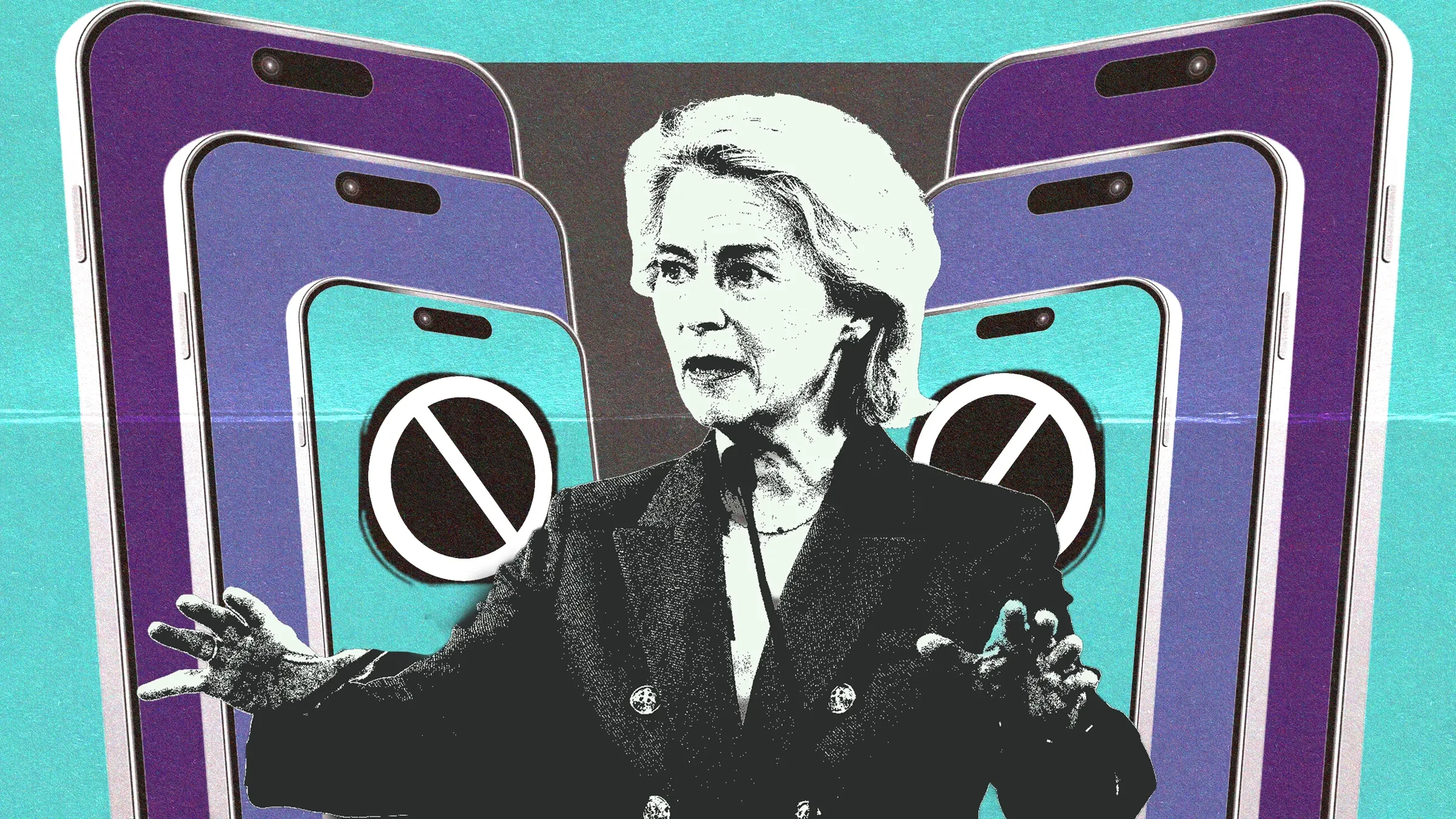
EU Unveils Landmark Harmonized Rules to Restrict Minors’ Unfettered Social Media Access, Curb Big Tech’s Predatory Design Practices
The European Commission has laid out cross-member-state plans to limit children’s unregulated access to social platforms, a policy designed to pull young people out of what Commission President Ursula von der Leyen described as Big Tech’s deliberate, exploitative capture of minors’ attention, focus, and cognitive development.
Core Rules Under the Incoming EU Kids Act
Unveiled during von der Leyen’s Wednesday State of the Union address, where she laid out the EU’s core 2025 policy priorities, the proposed rules include a full ban on standalone personal social media accounts for all children under 13. The full text of the overarching EU Kids Act will be formally released by the Commission on Thursday.
Minors between 13 and 15 years old will also be barred from opening unregulated personal social accounts. They will only be permitted to access social platforms via restricted, limited-feature “mini accounts” set up and fully supervised by their parents or legal guardians, with daily usage capped at a single hour.
All users under the age of 16 will also be covered by legally binding mandatory “safe design” requirements for social media platforms. The EU has signaled it will roll out even stricter restrictions on algorithmic addictive design in the upcoming Digital Fairness Act, scheduled for release this autumn.
Defiant Pushback Against Big Tech Dominance
In her address to the European Parliament, von der Leyen rejected widespread public cynicism that the power of large tech corporations is too overwhelming to regulate:
“I am aware that many perceive the power of Big Tech as overwhelming and impossible to roll back. I disagree. We do not have to accept addictive features, we do not have to accept children being drawn into ever more extreme content, we do not have to accept that girls have their photos used for AI generated sexualised images. Europe has the power to act; it is us who decide the rules, not Big Tech.”
The policy is explicitly framed as a response to well-documented harms linked to unregulated minor social media use: rising rates of childhood sleep loss, adolescent anxiety, self-harm, and even recorded minor deaths tied to harmful platform content, per von der Leyen.
Legislative Path and Industry Perspectives
17 of the EU’s 27 member states are already drafting or negotiating their own national online minor protection rules, many of which include minimum age requirements for social media access. Most recently, France’s highest court struck down a national under-15 social media ban last month for violating free expression rights.
Arnav Joshi, a technology lawyer at Ashurst Perkins Coie, estimates the full process of aligning all 27 member states, resolving legal disputes, and passing the final legislation will take roughly until 2029. Even so, he notes most tech firms will welcome the clarity of a single unified EU-wide rule set, rather than facing 27 conflicting national regulatory regimes.
He adds that the new tiered, proportional structure is intentionally designed to avoid the kind of judicial challenges that invalidated France’s national ban, noting the framework is even slightly more permissive than the sweeping total under-16 social media bans already implemented in the UK and Australia.
Unresolved Risks and Enforcement Hurdles
Industry and legal experts have flagged two major unaddressed gaps in the proposal, however. First, the mandatory dual oversight of supervised minor accounts, requiring deep parental monitoring of underage users, poses meaningful privacy risks. Joshi, who advises global tech firms on child online safety, warns that full-access “god mode” parental tracking tools could create a chilling effect on minors’ willingness to use social media for private, age-appropriate peer communication, and violate children’s fundamental right to personal privacy.
Second, enforcing accurate, non-intrusive age checks across platforms remains a largely unsolved practical challenge. Australian regulators have already documented widespread circumvention of their national under-16 social media ban by tech-savvy teens. “A key issue is how to carry out the age checks and it’s not straightforward,” explained Joanna Conway, digital regulation partner at Norton Rose Fulbright, noting that building accurate age verification systems that do not infringe on privacy rights or degrade normal user experience is a persistent unmet challenge. The EU has referenced a government-backed age verification app it launched earlier this year to confirm adult status for 18+ restricted content, which it plans to adapt for minor age validation for the new rules.
Broader EU Tech Regulation Agenda
Von der Leyen also tied the social media rule rollout to wider EU anxiety over the dizzying, unregulated speed of emerging tech development, noting that artificial intelligence has yet to deliver tangible, widespread public value for core real-world sectors including manufacturing, public healthcare, and national energy grids.
She teased a full suite of targeted AI policy initiatives set for announcement in November, covering use cases across health, transport, agri-food systems, advanced manufacturing, defense, and space. She also referenced the upcoming Quality Jobs Act, which will be written to ensure AI deployment supports worker upskilling, improves job quality, and “gives workers a fair chance.” She confirmed she will also host a dedicated roundtable with leaders of the world’s top frontier AI labs to align EU policy to support responsible, paced innovation in the sector.
EU Unveils Landmark Harmonized Rules to Restrict Minors’ Unfettered Social Media Access, Curb Big Tech’s Predatory Design Practices
EU Unveils Landmark Harmonized Rules to Restrict Minors’ Unfettered Social Media Access, Curb Big Tech’s Predatory Design Practices