Humane Tech Nonprofit CHT Cuts Half Its Non-Founder Staff, Abandons Policy and Litigation Work to Double Down on Founder-Led Advocacy
Exclusive reporting from former staff shared with WIRED
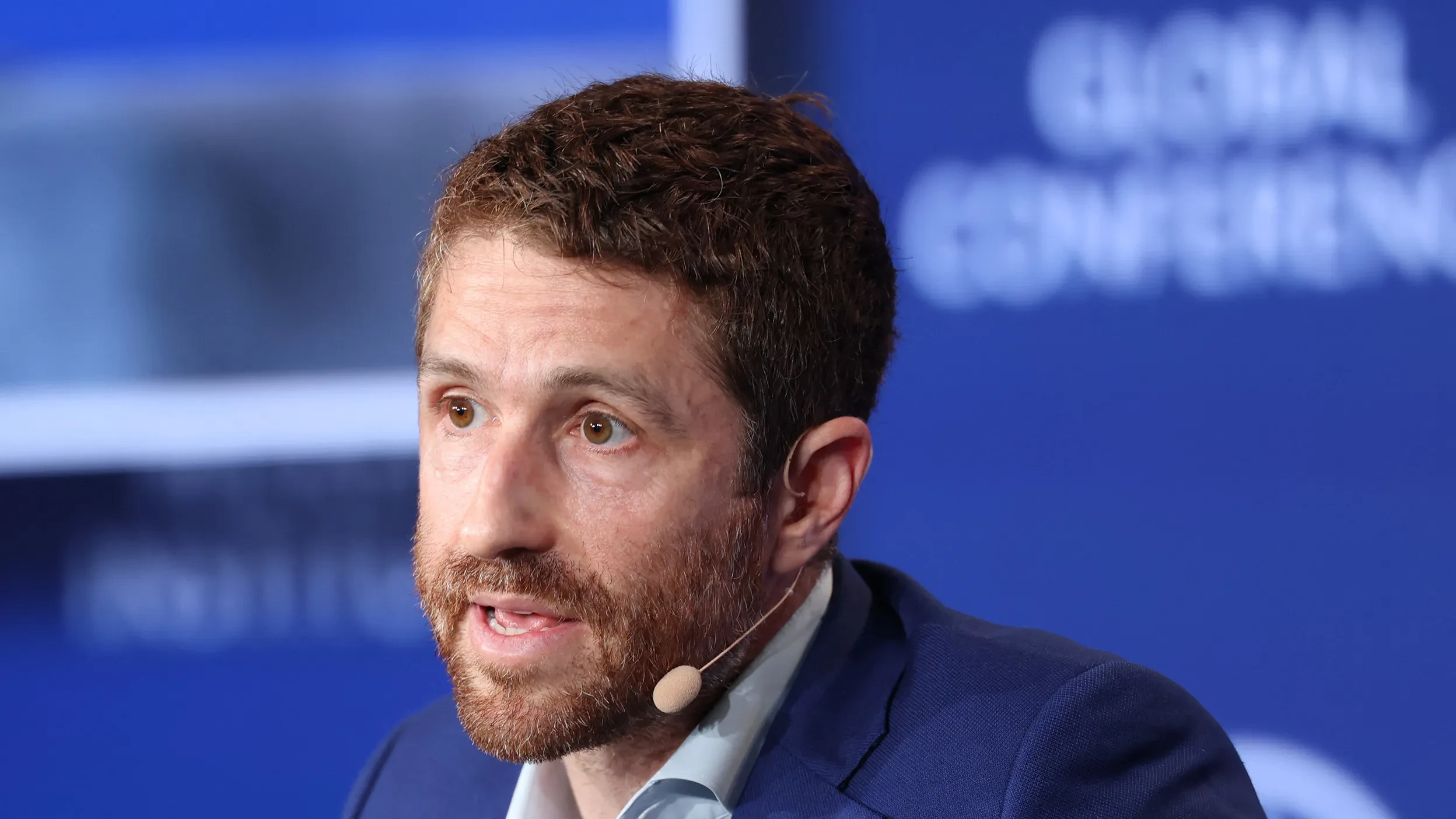
The Center for Humane Technology (CHT) — the online safety organization co-founded by ex-Google product manager Tristan Harris and catapulted to mainstream fame by the hit documentary The Social Dilemma — has laid off roughly half its 16 non-founder employees, multiple former staffers confirmed to WIRED. The restructuring will shutter the organization’s entire long-running policy research and litigation support divisions, reframing all work around what leadership calls "founder-led" priority projects.
The nine total departures include executive director Julie Guirado and senior strategy director Camille Carlton, and come on the heels of a historic streak of courtroom victories against major social media platforms. The litigation efforts leaned heavily on CHT’s original research documenting how social media products are intentionally engineered to keep minor users hooked to their screens. But per accounts from 16 former CHT employees — most of whom spoke to WIRED earlier this year on condition of anonymity to avoid professional repercussions — years of unresolvable internal debates over the organization’s core direction preceded the restructuring.
CHT’s independent board ultimately concluded that running two parallel operations at once: a high-profile advocacy front led by Harris, and a rigorous, research-focused think tank publishing independent policy papers, had spread the small team far too thin. The new organizational mandate, announced by the board last week, will focus all resources on initiatives led directly by CHT’s founding trio, including public education campaigns, targeted private stakeholder briefings, and cross-sector coordinated action, building on their existing track record of reaching mass audiences and engaging high-impact influential decision makers. The board confirmed that all functions related to third-party litigation support and independent AI tool evaluation would be eliminated, but did not initially share an exact headcount reduction figure.
“This moment of exponentially accelerating AI risk demands we align behind one single clear strategy, and we have chosen to focus on what we have always done best so we can rise to meet this critical moment,” CHT board chair Premal Shah said in a statement to WIRED.
In recent years, Harris has emerged as one of the most prominent public figures sounding the alarm on unregulated advanced AI risks, warning repeatedly of a potential "AI takeover" if frontier systems are allowed to operate outside of meaningful human control. "We have to act right now before it’s too late," he told NBC News last month. CHT has backed a landmark public petition calling for an immediate pause on large-scale AI training runs, helped organize a Congressional hearing focused on chatbot public safety risks, and advised on multiple investigations and lawsuits targeting AI labs for harmful product design choices, including an active case filed against OpenAI by the parents of a teenager who died by suicide after extended interactions with ChatGPT. Harris also starred in The AI Doc, a Netflix documentary released last month that pushes viewers to demand Congressional intervention to protect the public from unregulated technology risks.
Founded in 2017, CHT competes with decades-old established nonprofits and a flood of new, emerging advocacy groups for funding and public attention to shape federal and global AI policy. As high-profile incidents of AI-powered cyberattacks originating from major lab models renew public pressure to hold tech developers legally liable for design and engineering harms, CHT operates on an annual budget of roughly $6 million, with an equivalent sum held in reserves, funded primarily by high-net-worth families and private foundations.
But former employees warn that the organization’s full pivot to centering Harris’s public profile will divert critical resources away from what they see as far more urgent, underfunded work addressing AI’s looming threats to democratic systems and civil liberties. Gail Barnes, who advised CHT on social media strategy in the organization’s earliest days, says the board is actively abandoning the infrastructure built to translate Harris’s widespread mainstream fame "into durable, sustained pressure that could push real, tangible internal change inside major tech companies."
“Whether that choice is wise or a cowardly retreat depends on what you see as the core bottleneck for AI accountability right now: is the public still missing the argument that AI is dangerous, or is the problem that the argument has no enforceable institutional teeth? CHT is explicitly picking the first framing.”
Harris is widely celebrated for his sharp, memorable public commentary, and has been a ubiquitous fixture across media hits, tech industry conferences, and Capitol Hill advocacy circles for years. "He’s brilliant. He’s incredibly articulate," one former CHT colleague said. "He could have easily spent his entire well-paid career working on the dark side of tech, and for whatever reason, he chose to recognize that the status quo was deeply broken." Harris co-founded CHT alongside Aza Raskin — the self-proclaimed inventor of the infinite scroll design pattern — and Randy Fernando, a former Nvidia developer education lead. The organization’s original core goal was to push major tech firms to take formal accountability for the real-world social harms of their products, with early work focused on documenting risks ranging from algorithmically driven political radicalization to teen mental health degradation. The framing of tech products as intentionally designed to be addictive that Harris popularized quickly became a mainstream talking point across Silicon Valley: internal Meta documents released as part of court proceedings this year confirm that company leadership flagged Harris as an outreach target as early as 2018, years before his national profile exploded following the 2020 release of The Social Dilemma on Netflix.
“It’s impossible to overstate how much The Social Dilemma did to legitimize the entire tech accountability field as a serious advocacy space,” a leader at a peer nonprofit organization noted, speaking anonymously to preserve their working relationship with CHT.
Former staff add that internal tensions often flared between Harris and his teams over whether to prioritize consumer-facing outreach, direct private negotiations with tech companies, or lobbying federal lawmakers, with many long-time employees growing frustrated by Harris’s frequently shifting priorities. Multiple former staffers described the team culture as unnecessarily "frenetic" and "insanity-inducing" as projects were repeatedly scrapped mid-development. Shah pushed back on that characterization, but acknowledged that the organization maintains a very fast-paced culture driven by the extreme urgency of its mission. Multiple scrapped projects illustrate that frequent priority shift: a popular online course for tech workers looking to learn how to build more humane, ethical systems that drew thousands of global participants was retired after Harris shifted his full focus to AI risks, and a planned resource hub for K-12 educators to help families navigate screen time harms was shelved indefinitely. Multiple ex-staff noted that the organization increasingly operated as a dedicated platform for Harris to amplify his public messaging to global audiences, with his and Raskin’s co-hosted podcasts and video series garnering massive mainstream viewership, and Harris landing exclusive private meetings with top U.S. lawmakers and C-suite leaders at the largest tech companies. Former employees described CHT’s strategy as prioritizing "grasstops" elite stakeholder engagement over traditional grassroots movement organizing, a choice many saw as fundamentally misguided. Shah counters that CHT’s mass public education work builds widespread grassroots pressure that in turn unlocks action from top level decision makers, and notes Harris is one of the only public figures in the world who can communicate cross partisan lines to reach broad national audiences.
Multiple former staffers also alleged that the founding team’s desire to retain their status as respected Silicon Valley insiders made them reluctant to publicly criticize former employers or companies where close personal contacts held senior leadership roles — a characterization Shah rejects outright, noting CHT has "always taken an aggressive, uncompromising stance against harmful big tech practices." Other ex-employees linked high team turnover to Harris’s taxing management style, pointing to a 2023 staff retreat where employees returned deeply upset after being pushed to participate in intrusive, overly personal trust-building exercises. The incident prompted CHT’s independent board to intervene, after which Harris stepped down from his executive director role to take the less operational position of organization president. Shah says that past staff turnover "stemmed from legitimate differences in problem analysis and tactical approaches to advancing our core mission," and explicitly denied that Harris’s role shift was related to the 2023 retreat incident.
Even with that internal turmoil, CHT’s broader tech accountability strategy delivered major results in recent years. 2021 saw U.S. state attorneys general open widespread investigations into Meta, later filing multi-state lawsuits alleging the company intentionally misled teens and parents about product harms. This year, Meta agreed to a multi-billion dollar global settlement to resolve many of those claims, and separate juries (including one that heard testimony from co-founder Aza Raskin) ordered the company to pay hundreds of millions in additional penalties for harms to youth users. Other major social media platforms also agreed to parallel large-scale litigation settlements in 2024.
The leader of a peer tech nonprofit who praised CHT’s under-the-radar, high-impact work in state legislatures and courtrooms earlier this year called the decision to abandon that entire portfolio "deeply disappointing."
“Real, lasting systemic change comes from broad grassroots movements and democratic action, not celebrity influencers and closed-door backroom deals.”
Multiple former staffers joke privately that CHT is now effectively rebranded as the "Center for Helping Tristan" to elevate his personal public profile. Shah rejects that framing entirely, noting the organization’s sole core mandate remains ensuring "the world’s most consequential emerging technologies serve the broad public good."
Humane Tech Nonprofit CHT Cuts Half Its Non-Founder Staff, Abandons Policy and Litigation Work to Double Down on Founder-Led Advocacy
Humane Tech Nonprofit CHT Cuts Half Its Non-Founder Staff, Abandons Policy and Litigation Work to Double Down on Founder-Led Advocacy