Bipartisan Congressional Proposal Ties Federal Highway Funding to Strict Limits on Flock Automated License Plate Readers
Two cross-party US legislators have confirmed to WIRED that they will formally introduce new federal legislation today, designed to penalize states that fail to crack down on unregulated deployment of Flock cameras and other automated license plate readers (ALPRs).
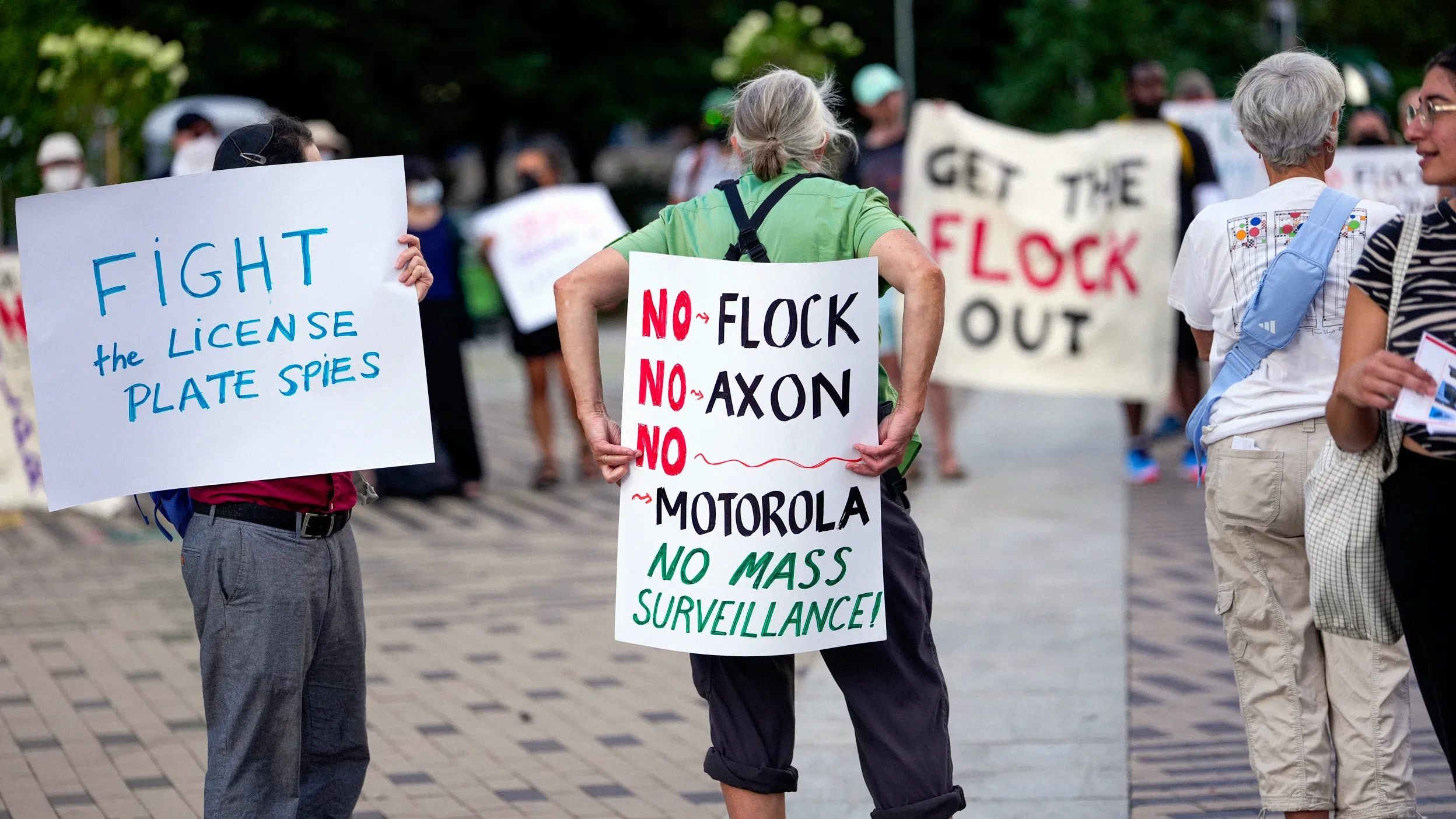
The widely adopted ALPR tools, originally built to help law enforcement trace the locations of vehicles connected to reported crimes, have sparked nationwide public outcry over the past several months, after a wave of documented cases of officers misusing the systems for inappropriate, non-public safety purposes.
Core Rules of the No FLOCK Act
Dubbed the No FLOCK Act — short for Federal License-Plate Observation and Camera Keeping Act — the bill mandates that the US Secretary of Transportation withhold 10% of annual federal appropriations earmarked for state highway, local road, and bridge maintenance and construction if a state does not restrict the use of Flock and equivalent ALPR systems to only five explicitly approved use cases.
The bill’s two cosponsors are Congressman Raja Krishnamoorthi, a Democrat representing Chicago’s suburban districts, and Michael Cloud, a Republican whose Texas congressional district covers the city of Corpus Christi.
The narrow set of permitted uses laid out in the legislation are limited to:
Enforcement of electronic toll collection systems
Identification of stolen vehicles
Searches for missing or endangered people
Tracking vehicles registered to individuals with active felony arrest warrants
Investigations into vehicles confirmed to be involved in felony offenses
Uses that are explicitly banned under the proposed state compliance rules include traffic pattern studies, investigations of minor drug offenses, and routine parking and speeding enforcement.
“Our office’s investigation into Flock exposed massive, unaddressed gaps in oversight of these surveillance tools,” Krishnamoorthi said in a prepared statement. “This bipartisan bill installs clear guardrails to stop widespread abuse, while preserving the legitimate public safety functions these cameras can serve.”
Key Limitations of the Proposal
Notably, the legislation stops far short of a full ban on Flock ALPR systems — the top stated demand from the global grassroots protest movement targeting the Atlanta-headquartered surveillance firm and its industry competitors. It also includes no provisions to block Flock users from sharing collected license plate tracking data widely with other government agencies, including federal immigration enforcement authorities.
Flock Inc. did not immediately respond to WIRED’s request for comment on the newly unveiled proposed legislation.
If the bill passes into law this year, non-compliant states will start losing between tens of millions and hundreds of millions of dollars in annual surface transportation funding as of October 2028. The US Department of Transportation calculates each state’s annual surface transportation allocation based on metrics including total roadway mileage and average traffic volume across its road networks.
This legislative tactic of tying federal transportation funding to state policy changes is a well-established, previously successful approach for Congress to push nationwide public safety standards: it was the leverage used to implement the national minimum drinking age, uniform state rules for driving under the influence, and federal regulations governing billboards along interstate highways.
Broader Policy and Political Context
This is not the first bipartisan ALPR reform bill introduced in the current Congress: a separate recent proposal would ban the use of any federal funds to purchase Flock cameras entirely. Federal lobbying filings also show that Flock’s spending on DC advocacy has remained steady over the past 18 months, and the firm recently hired a fifth external lobbying firm to support its policy outreach efforts.
Unregulated emerging tech harms — including unvetted rogue AI systems, contentious local fights over data center construction, and documented police misuse of Flock ALPRs — have all emerged as top voter-focused talking points for the upcoming US midterm elections, now less than two months away. Even so, it remains unclear whether any of the proposed legislation responding to these voter concerns will advance through both chambers of Congress in the near future, let alone win signing off from President Donald Trump. The president publicly voiced his support for Flock cameras on Sunday, telling assembled reporters that the tools provide clear, valuable support for law enforcement operations.
While most sitting lawmakers agree the cameras have legitimate public safety value, they have expressed widespread frustration over high-profile cases where police officers were caught using Flock footage for personal, non-work related purposes, including stalking former romantic partners. One independent recent report documented at least 100 separate alleged abuse incidents linked to ALPR systems over the past 8 years.
“Taxpayers should never be forced to fund the erosion of their own civil liberties, or the unchecked expansion of a domestic surveillance state,” Cloud said in a statement. “Flock cameras enable mass, sweeping surveillance of ordinary Americans that directly infringes on Fourth Amendment protections against unreasonable search and seizure.”
Data from New York University School of Law’s Policing Project shows that roughly 25 US states and territories currently have existing rules on the books governing automated license plate readers, most of which focus on transparency requirements for the systems and rules requiring prompt deletion of collected unnecessary data. Very few of those existing rules place strict limits on the types of use cases permitted for the ALPR technology.
“This bill is the critical first step toward reining in unaccountable, unchecked surveillance across the country,” Cloud noted in his closing remarks, adding that “we can fully protect public safety without sacrificing the fundamental privacy rights of the American people.”
Bipartisan Congressional Proposal Ties Federal Highway Funding to Strict Limits on Flock Automated License Plate Readers
Bipartisan Congressional Proposal Ties Federal Highway Funding to Strict Limits on Flock Automated License Plate Readers