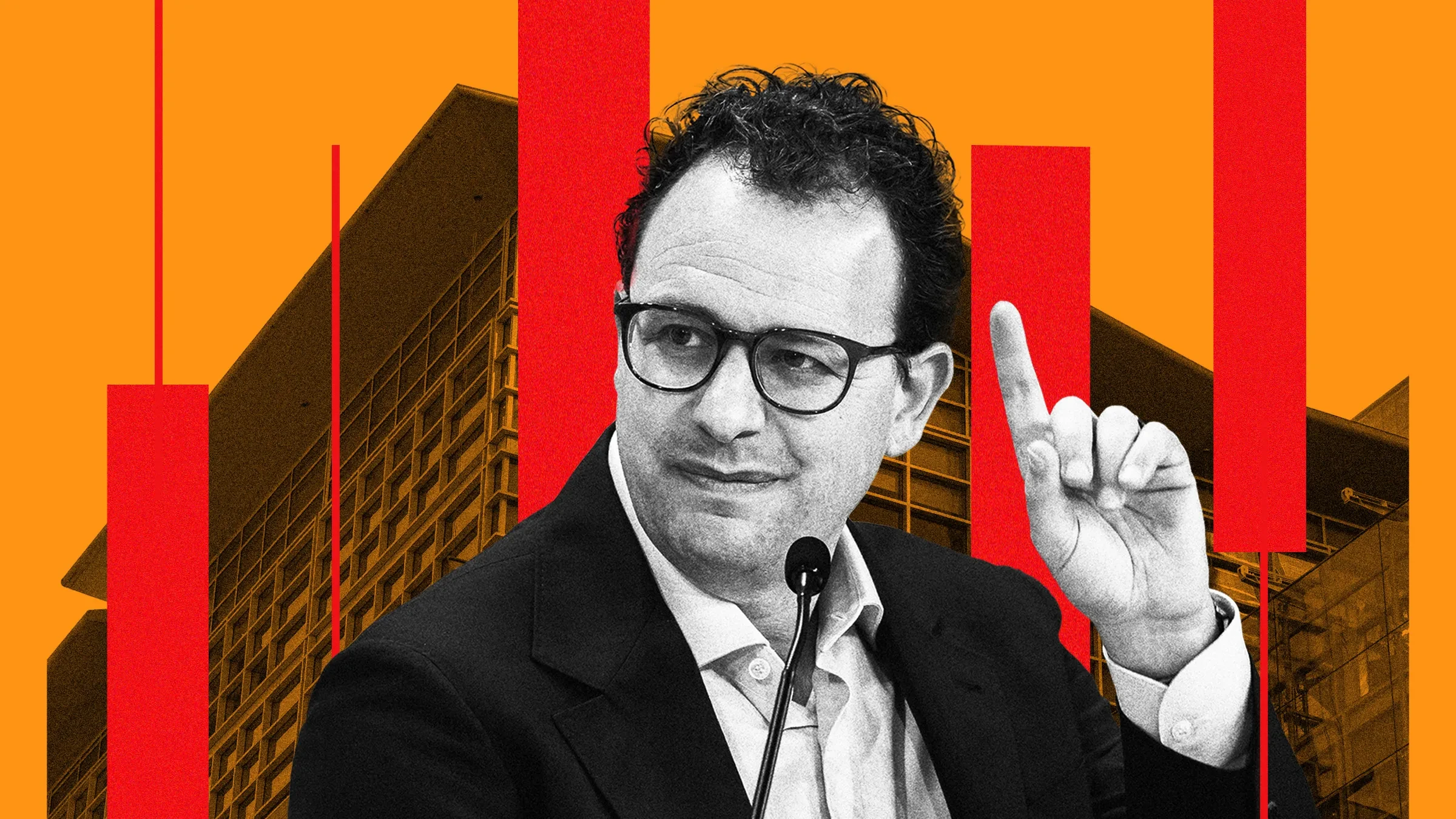
Anthropic Unveils Landmark S-1 Filing Ahead of Hotly Anticipated IPO, Discloses Explosive Revenue Growth, Mounting Losses and Unusually Comprehensive Risk Disclosures
On Monday, Anthropic submitted its core regulatory paperwork to kick off its highly awaited public debut, releasing granular new details on its financial performance, operational footprint, and the sweeping set of unique risks facing its fast-growing artificial intelligence business.
Per the filing, the AI firm behind the Claude model line plans to list on the Nasdaq exchange under the ticker symbol
ANT, with The Wall Street Journal reporting the public offering could launch as early as late November this year. The submitted S-1 prospectus does not include formal disclosures for its intended fundraising target or proposed public valuation, though the New York Times reported back in August that Anthropic was targeting to raise more than $100 billion at an implied ~$2 trillion valuation."The advent of machine intelligence is one of the seminal moments in human history," Anthropic wrote directly in the public filing. "We encourage you, as a prospective owner of our stock, not to frame your purchase as a purely transactional financial decision. We hope you will see it instead as an opportunity to be part of something far larger than a typical corporate public listing."
The document provides full transparency into the company’s financial results through the first half of 2026, revealing staggering top-line growth: Anthropic’s revenue hit more than $16 billion across the first six months of the year, a massive jump from the roughly $4.5 billion it booked in full-year 2025. The Claude developer emphasized its rapidly scaling enterprise client base as a key competitive strength, noting that more than 11,900 customers spent at least $100,000 on its services over the past 12 months, over 1,900 spent $1 million or more, and roughly 250 high-volume enterprise accounts spent $10 million or more.
Even with that extraordinary revenue expansion, Anthropic remains deeply unprofitable: it posted a net loss of $80.7 billion in H1 2026, a dramatic rise from the $13 billion net loss it recorded in the same period the prior year.
While all standard IPO prospectuses require companies to disclose known risk factors, Anthropic’s S-1 stands out for its unflinchingly thorough, unusually wide-ranging list of potential operational pitfalls, opening with a clear warning that investing in its stock carries "a high degree of risk". The catalog of hazards covers every major category facing frontier AI developers, from ongoing struggles to secure sufficient high-powered compute to train its next-generation models, to cutthroat competition from rival AI labs, to the inherent reality that advanced AI systems could "pose catastrophic or existential risks to humanity".
The filing spells out specific high-stakes risks in explicit terms: it notes that malicious threat actors could misuse its state-of-the-art AI systems to launch large-scale cyberattacks or engineer novel, never-before-seen biological weapons, while authoritarian regimes could deploy its models for mass domestic surveillance of their populations. It also flags the distinct risk that Anthropic could lose operational control of the powerful frontier models it builds entirely, and calls out volatile, unpredictable government action as a major vulnerability — specifically naming the Trump administration’s prior decision to designate the company as a U.S. supply chain risk.
"While we continue to collaborate with U.S. government agencies, we cannot be certain that the resolution of these pending regulatory actions and lawsuits will not harm our ability to sell to federal agencies, or to commercial clients that provide products and services to the U.S. government — outcomes that would in turn adversely impact our business, financial condition, and operational results," the filing concludes.
The IPO process is unfolding against a backdrop of massive industry upheaval: in September, Anthropic’s top rival OpenAI — which filed confidentially for its own public offering over the summer — announced it was scrapping all plans to go public in 2026, citing rising internal concerns over the existential risks advanced AI poses to humanity.
Founded in 2021 by seven former OpenAI employees who split from the lab after losing faith in OpenAI’s ability to develop advanced AI systems safely, Anthropic has long positioned itself as the AI industry’s most safety-focused major player. Its CEO Dario Amodei has repeatedly spoken publicly about the risk advanced AI could drive mass displacement of workforces and act in direct opposition to human interests. The S-1 also lays out Anthropic’s long-term core ambitions: building ever-more-powerful AI models capable of accelerating breakthrough scientific discovery, curing intractable diseases, and driving widespread global economic growth.
"To build AI is to harness cognition itself, and anything so powerful can be used for ill as well as good," the company wrote.
Anthropic did not immediately respond to WIRED’s request for additional comment on the filing details. This is an actively developing story, please check back for subsequent updates.
Anthropic Unveils Landmark S-1 Filing Ahead of Hotly Anticipated IPO, Discloses Explosive Revenue Growth, Mounting Losses and Unusually Comprehensive Risk Disclosures
Anthropic Unveils Landmark S-1 Filing Ahead of Hotly Anticipated IPO, Discloses Explosive Revenue Growth, Mounting Losses and Unusually Comprehensive Risk Disclosures